Chapter 1 · Start Here
The hesitation everyone has, and why this app instead of a notebook
You open a journal. The page is blank. You know what you want to write, and you write something slightly different.
It happens so fast most people never notice it. The sentence that comes out is a little tidier than the thought. A name becomes "someone." The real reason becomes "stuff." And a few weeks later the journal feels pointless, because it's full of a version of your life that isn't quite yours.
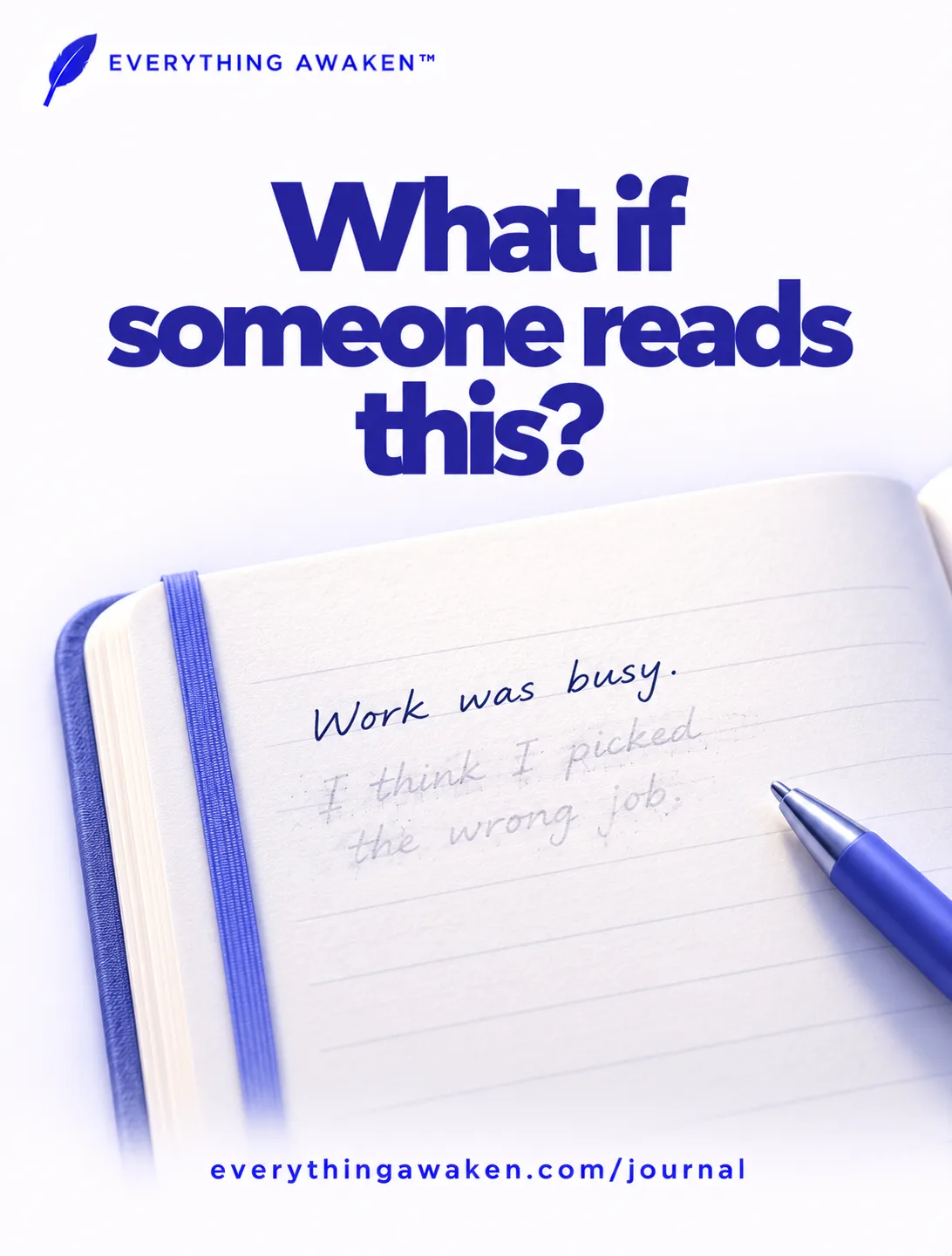
Most people who stop journaling don't stop because they ran out of things to say. They stop because of one quiet thought sitting behind every sentence: what if someone reads this.
This post is about that thought, why it matters more than it seems, and how Awaken Journal was built around it.
The reader who isn't there
When we know, or even suspect, that someone might read our words, we start writing for them. We choose what makes us look reasonable, we skip what makes us look weak, and we explain ourselves instead of just saying the thing.
In a conversation, that editing is useful. In a journal, it defeats the purpose. A journal is the one place where you're meant to see your own thinking as it really is. If you're editing for a reader, you're reading a performance back to yourself.
The research on this is worth knowing. In the expressive-writing studies that psychologist James Pennebaker began in the 1980s, which are the foundation of most modern thinking about journaling, participants were typically told their writing would stay private. Privacy wasn't an extra. It was part of the method.
How to notice it in yourself
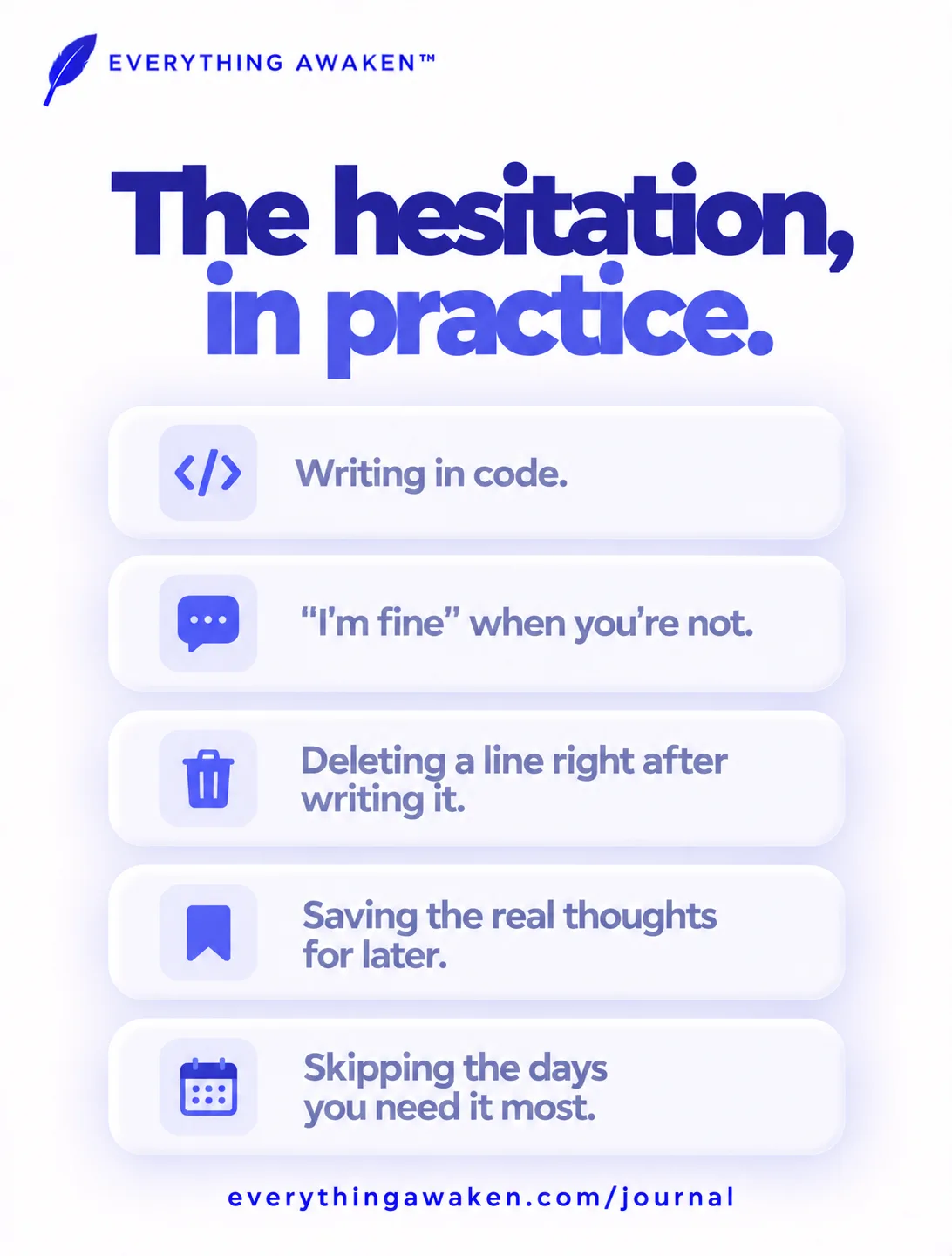
The hesitation rarely announces itself. It shows up as small habits:
- Writing in code, or leaving out names and places.
- Writing "I'm fine" or "long day" when that's not what the day was.
- Deleting a sentence right after writing it.
- Keeping the real thoughts for "later," and later never coming.
- Not writing at all on exactly the days you most need to.
If any of these sound familiar, the problem was never discipline. It was trust in the page.
What we did about it
You can't talk someone out of this feeling with a promise. "We'd never read your journal" is still a sentence that asks you to trust the people who could. So Awaken Journal was built so that nobody on our side can read what you write, even if we wanted to.
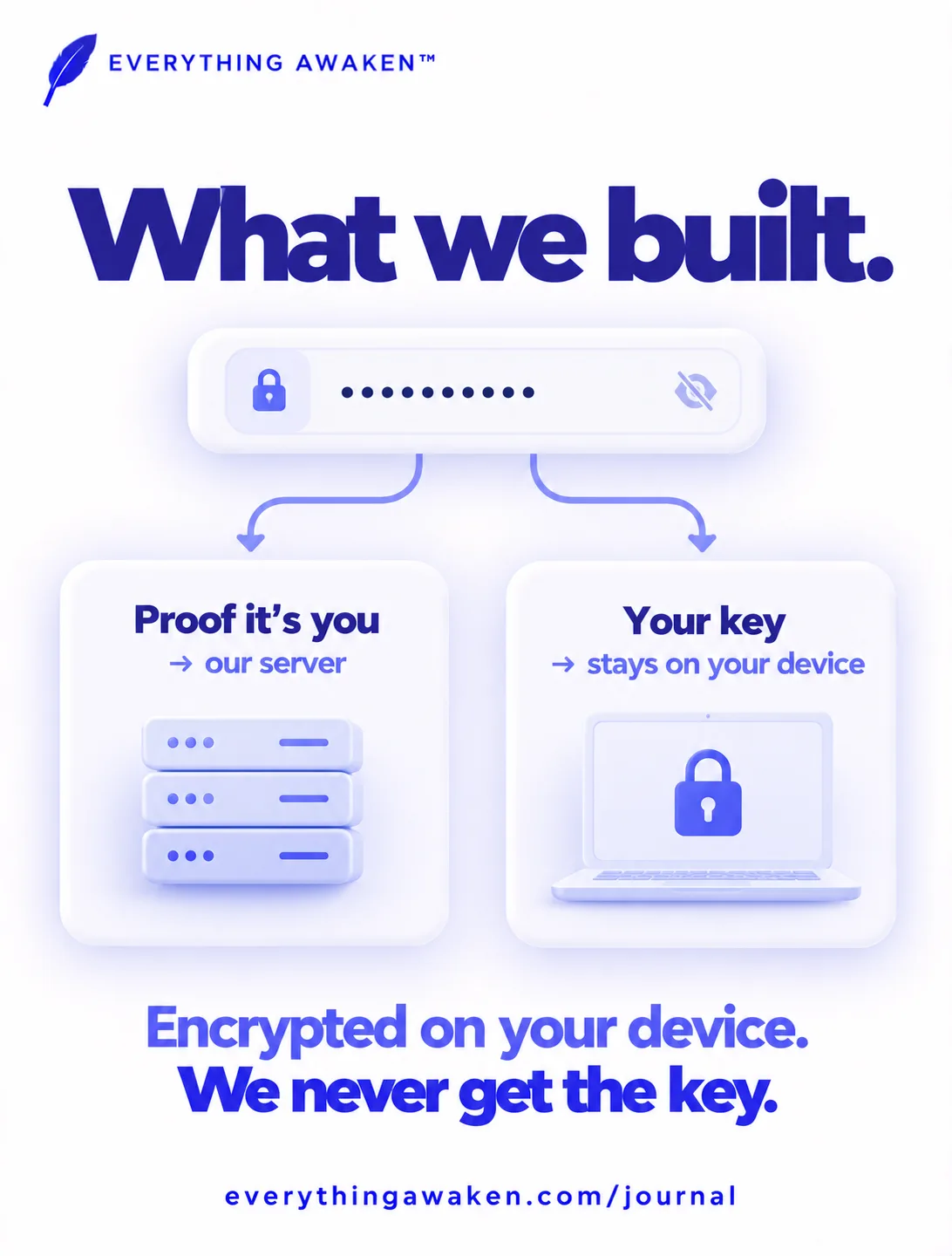
Your entries are encrypted on your device before they ever leave it.
That key comes from your own password.
Think of a bank with safe deposit boxes. At the counter, you prove who you are and they let you into the vault room. Then you open your box with your own key. Most apps are a bank that also keeps a copy of every customer's key and promises not to use it. Awaken Journal is the bank that genuinely doesn't have your key.
This comes with one honest cost, and you should hear it here rather than find it later: if you forget your password, we cannot recover your writing. A company that could recover it would be holding a way into it, and that way in would exist for everyone else too. That's why the app shows you a warning at sign-up that you can't skip. Chapter 2 explains the whole mechanism, including exactly what our server does see, like your email and the dates of your entries, but never the words.
So why not just use a notebook?
A paper notebook solves the privacy problem beautifully. It needs no server, and nobody can read it without holding it.
But it's the wrong tool the moment you want to:
- find what you wrote about a project six months ago,
- see the week you're describing next to what you spent that week,
- carry it everywhere without carrying it everywhere,
- or get a gentle nudge when you haven't written in four days.
Notebooks give you privacy with no structure. Most apps give you structure, but they hold a copy of the key. Awaken Journal was built to give you both.
Privacy and structure. A notebook is private but has no structure, most apps have structure but hold a key to your writing, and Awaken Journal was built for both.
Start smaller than you think
If you've been writing for an imaginary reader, the fix isn't a new routine. It's one sentence that nobody else will ever see.
Open today. Write one true line, the one you'd normally tidy up, and leave it as it is. That's the whole first step. The next post covers what Awaken Journal is, who it's for, and just as importantly, what it deliberately refuses to do.